
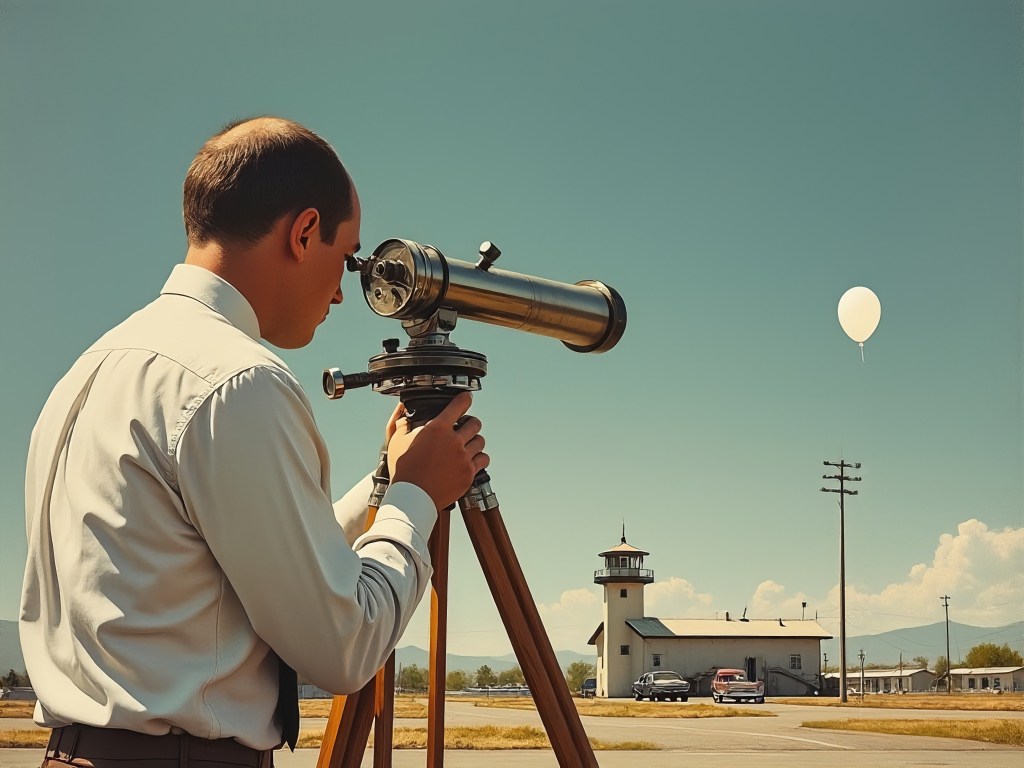
The AI image approximates the scene of Dad measuring the wind speed with his equipment.
I used this prompt: Generate a vintage Rembrandt-style painting of my then 25-year-old Dad as a weatherman at the local Sacramento Municipal airport, using a manual scope theodolite to track a tiny plain white weather balloon in the upper right of the frame. The scope is pointed at the balloon. The balloon has no string. It takes place in the ’60s. The scope is pointed upward at the disappearing white balloon. Dad is to the left, peering into the scope lens. He was a weatherman. He wears a white shirt and tie and faces the “camera.” The scene is in a small airport setting with the tower nearby. Dad had receding hair even at the age of 25.
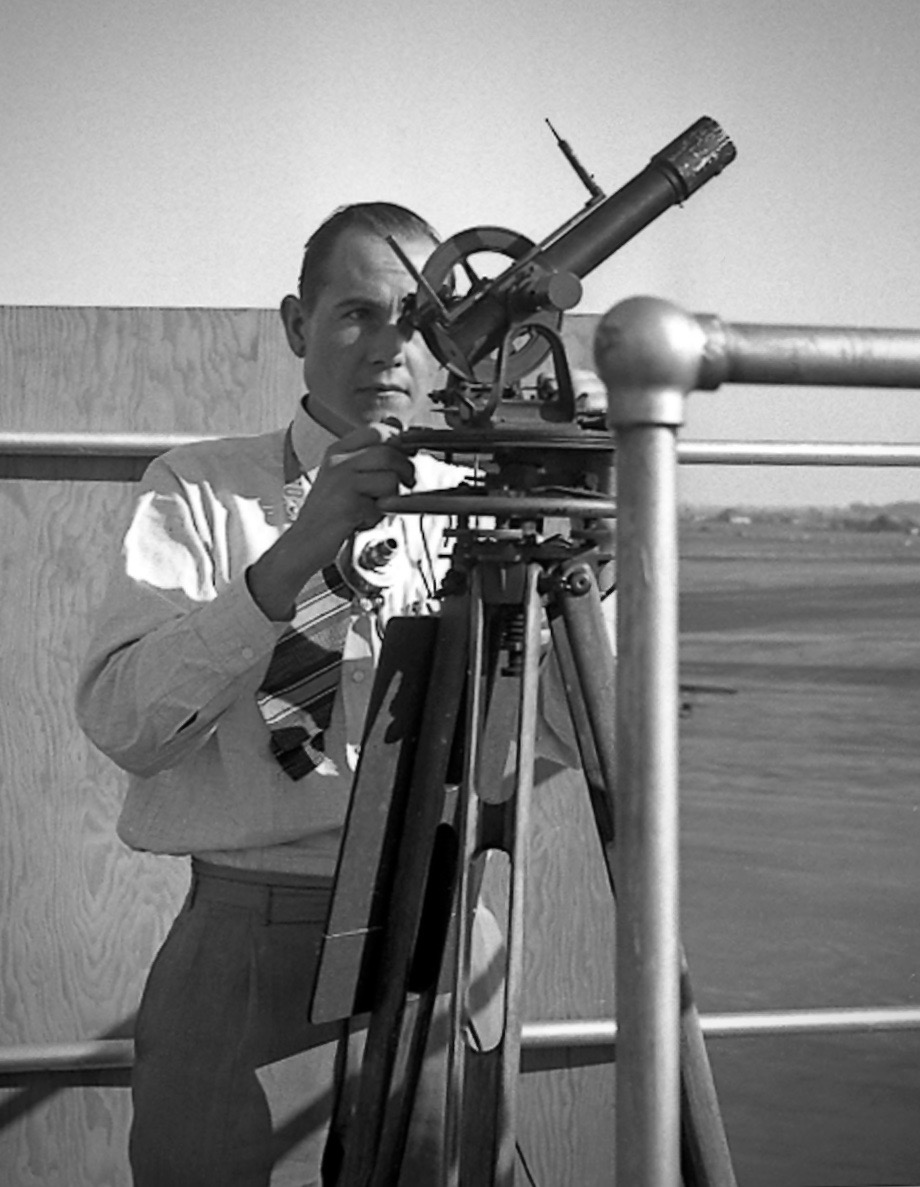
A theodolite is an optical instrument used in surveying and engineering to measure angles in horizontal and vertical planes. Here are some critical points about theodolites:
Basic Components:
Telescope: Mounted on a base, it can rotate in horizontal and vertical planes. It’s used for sighting the target object.
Horizontal and Vertical Circles: These are graduated circles used for measuring angles. The horizontal circle measures azimuth angles, while the vertical circle measures zenith or altitude angles.
Leveling Head: This includes the base of the theodolite, which can be leveled using foot screws to ensure the instrument is perfectly horizontal.
Plumb Bob: Used for centering the theodolite over a point on the ground.
Spirit Levels: To ensure the instrument is level before taking measurements.
Meteorology: For tracking weather balloons to determine wind speeds and directions at various altitudes.
 imaginate.pro